Our Story
Where Memory
Meets Momentum
NeuroMotive was founded on a single observation: personalized reminiscence, delivered in a familiar voice, can reach people that nothing else can.
The Beginning
NeuroMotive began with a great-aunt and a few photographs.
The founder watched his great-aunt move through her days saying only a handful of short, repeated phrases. Conversations had grown shorter. Recognition had become unreliable. The family had begun grieving someone who was still in the room.
Then came the photographs — personal ones, from her actual life — accompanied by a recorded voice she recognized. A family member's voice, narrating her own story back to her.
Something changed. She began pointing. Identifying people. Expanding her vocabulary beyond what anyone had recently heard from her.
The shift was measurable. Her engagement deepened. Her expression broadened. She was still there — she simply needed the right catalyst to come forward.
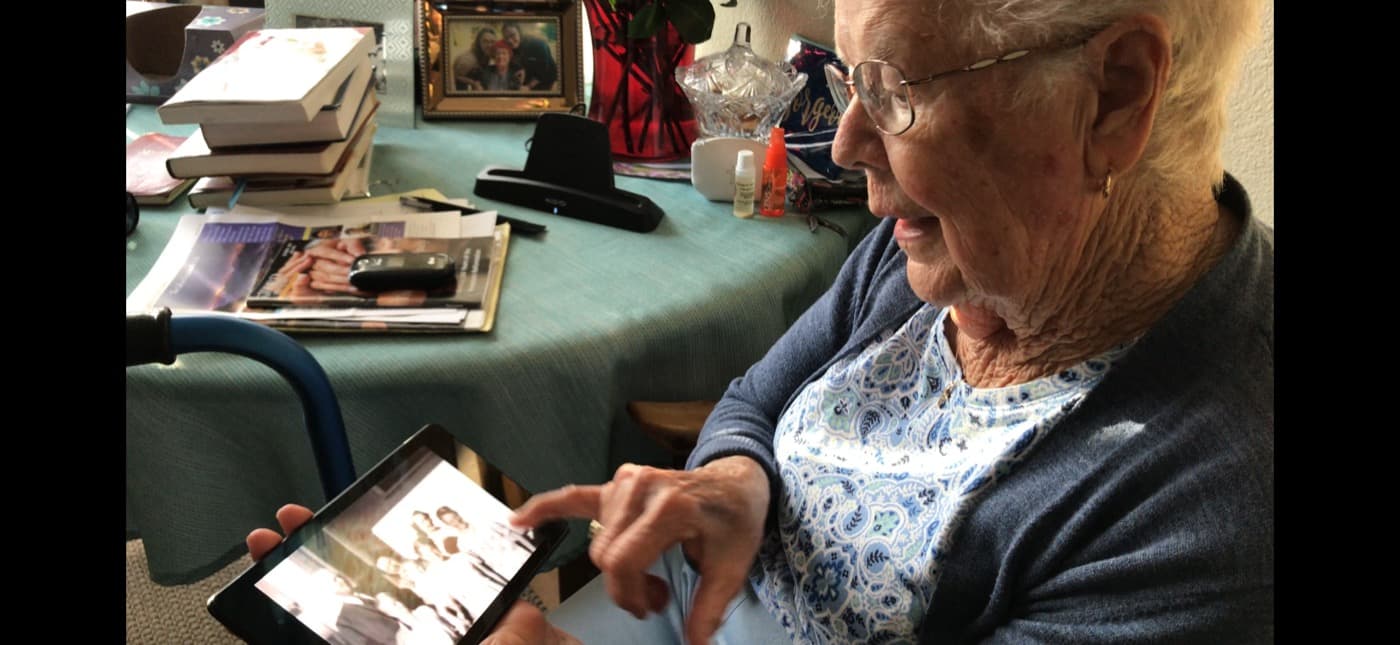
It raised a question that wouldn't go away: what if every family could do this? What if every resident — in every senior community, every memory care unit, every rehabilitation ward — had access to a session built from their own life?
That question became NeuroMotive.
The Evidence
Why reminiscence therapy works
The clinical foundation has been building for decades. NeuroMotive is built on top of it.
Long-term memory is the last to go
In dementia and cognitive decline, autobiographical memory — the memory of one's own life — is often preserved longer than short-term recall. Reminiscence therapy activates these preserved networks, supporting verbal output and emotional presence even in late-stage conditions.
Familiar voices activate different pathways
Neuroimaging research shows that voice familiarity activates distinct regions of the brain associated with social bonding and personal identity. Narration from a known family member produces measurably different engagement than the same content delivered by a stranger.
Personalization is not optional
Generic content — whether activities programming, shared media, or unfamiliar imagery — produces limited response in populations with significant cognitive impairment. The specificity of content matters: this resident's places, faces, and milestones produce responses that general programming cannot replicate.
Engagement is documentable and clinically meaningful
Session engagement, verbal output, and mood response during reminiscence therapy can be tracked and reported. In skilled nursing and rehabilitation settings, these metrics support therapy documentation, MDS scoring, and care plan justification.
30+ years
of published reminiscence therapy research
31–84%
improvement in participation reported by partner facilities
4 settings
Assisted Living, memory care, SNF, and clinical rehab
What We Built
The infrastructure that makes it possible at scale
The insight was clear. The challenge was turning a family moment into a repeatable, scalable clinical tool — without losing what made it work.
Families contribute from anywhere
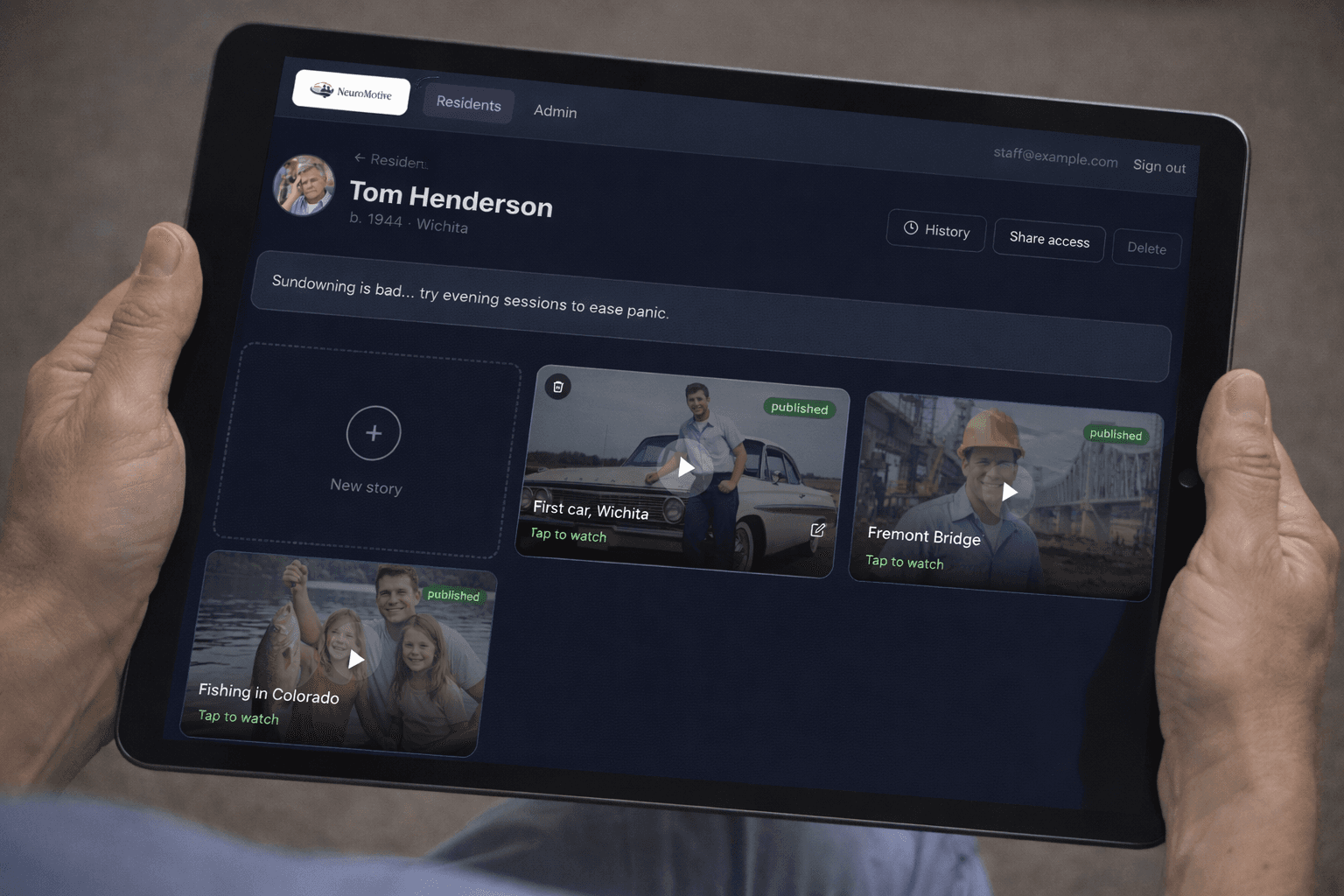
Family members upload photos and record their voice through a private web portal — no app, no login complexity. From any phone, any distance. The content that works is already in their hands.
NeuroMotive creates the story
Our platform automatically blends the uploaded photos and recorded narration into a guided reminiscence video — complete with gentle music and smooth transitions. No editing, no assembly required.
Residents watch. Staff document.
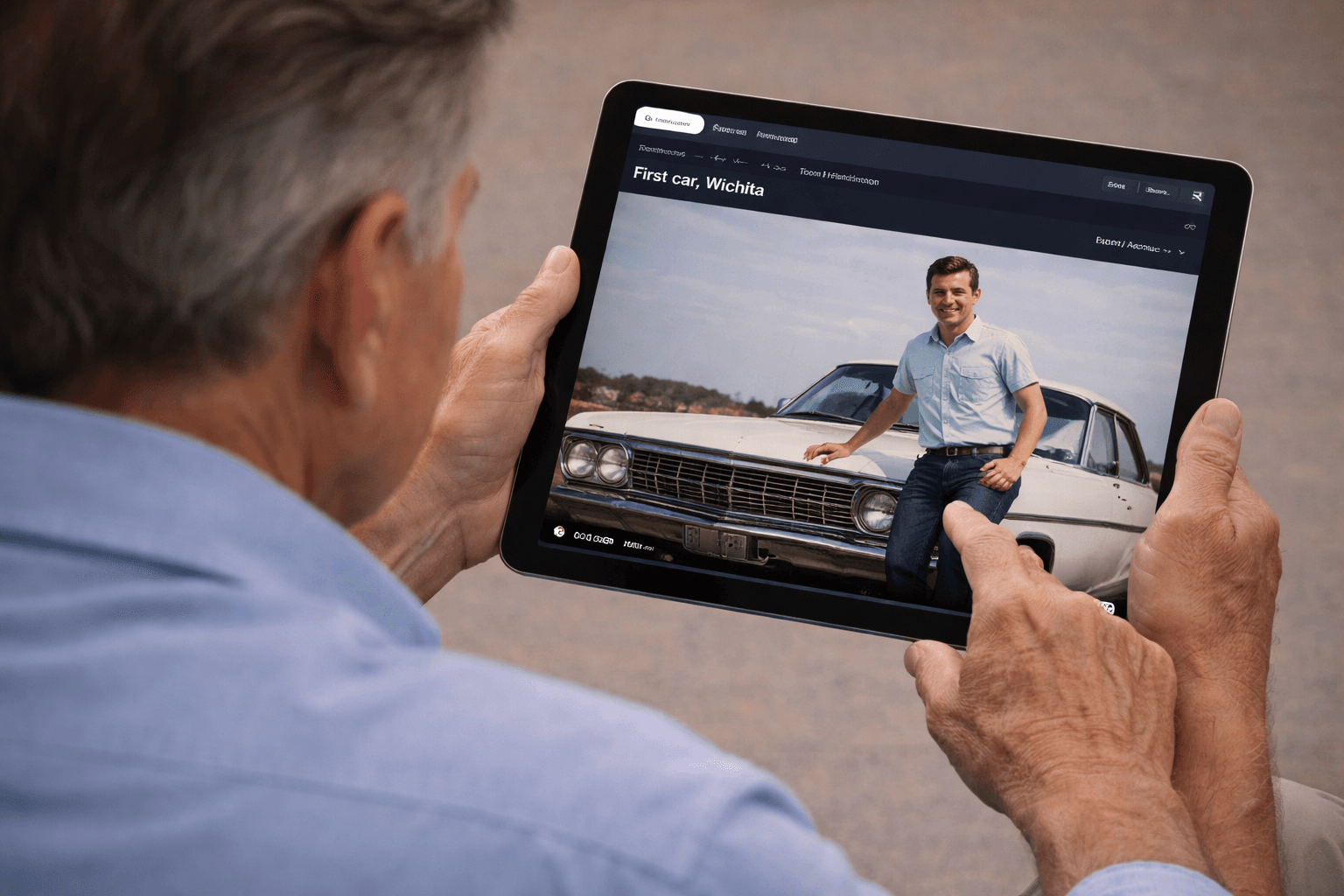
Sessions play on a tablet in individual or small group settings. Afterward, staff log engagement, mood, and observations — building a longitudinal record of participation and response.
Built for the people who use it.
Every design decision in NeuroMotive is driven by two users: the resident watching a session, and the staff member running it. The family portal is designed for grandparents who don't consider themselves tech-savvy. The Facility App works on any tablet in any facility Wi-Fi environment. The session builder doesn't require training to use.
We believe the best care technology disappears into the care — it doesn't add friction, it removes it.
NeuroMotive is a HIPAA-compliant platform with a Business Associate Agreement (BAA) included in every contract. Audit logging, encryption at rest and in transit, role-based access controls, and a 30-minute session timeout on shared devices are standard.
Our Mission
Bringing structured, personalized reminiscence therapy to every community that needs it.
Today, we serve senior living communities, memory care units, skilled nursing facilities, and clinical rehabilitation settings — including stroke recovery, TBI, and neuro rehab. Every setting is different. The core need is the same: residents who can be reached through their own story, if someone will take the time to build it for them.
Senior Living Communities
A premium resident feature that families notice and administrators can measure.
Memory Care Units
Personalized engagement for residents with dementia and Alzheimer's — reaching people that generic programming cannot.
Stroke & Aphasia Rehabilitation
Familiar content to support language recovery and cognitive re-engagement within therapy sessions.
TBI & Neuro Rehabilitation
Memory-anchored sessions integrated within PT, OT, and speech therapy workflows.
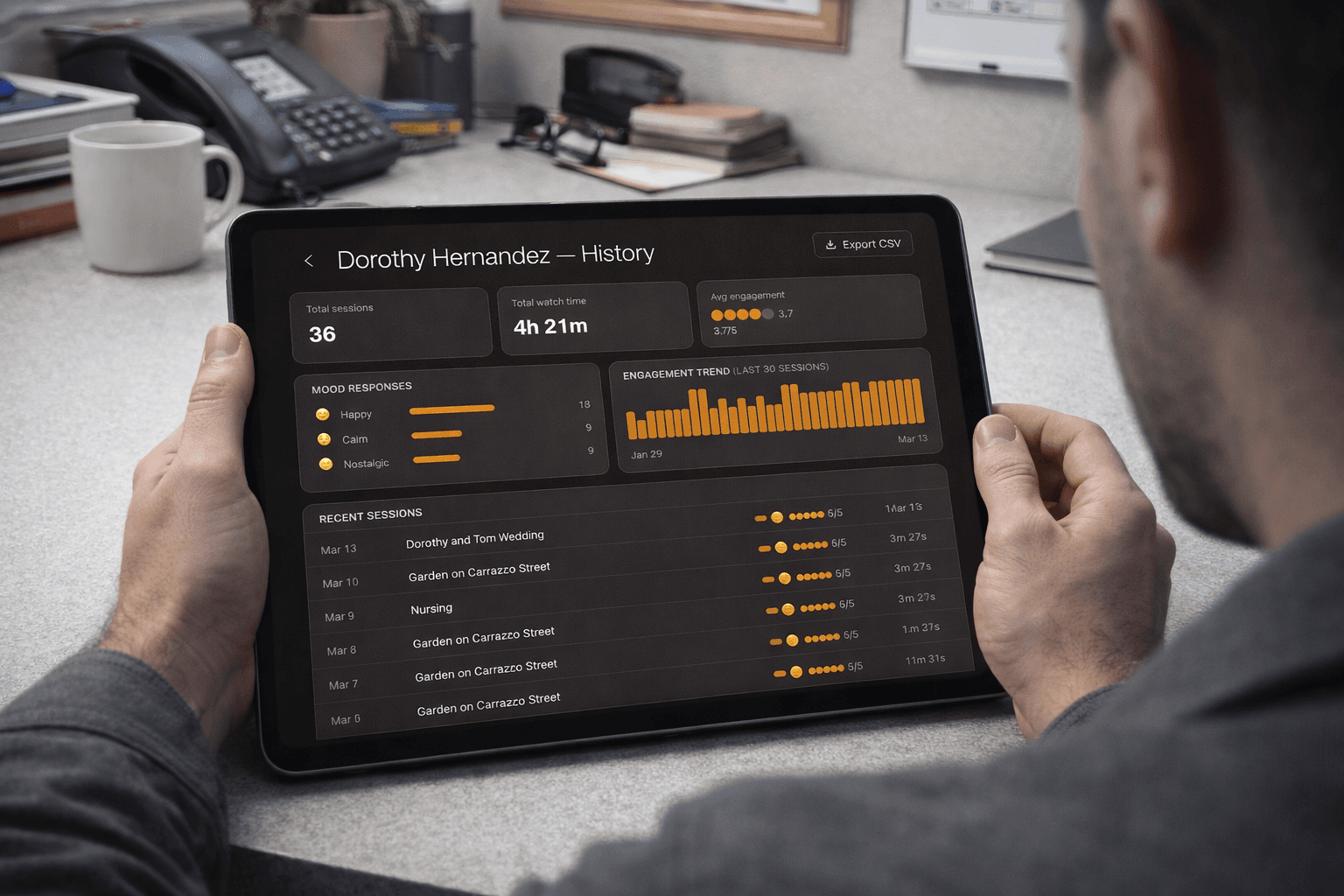
Every session is tracked — engagement scores, mood responses, and trends over time. Downloadable history for care teams and families.
What We Believe
The convictions that shape everything we build
Every person carries a complete life — regardless of how much of it they can access on any given day.
Cognitive impairment changes what can be retrieved, not what happened. The story is still there. NeuroMotive is built to help bring more of it forward.
Families are the most powerful care resource most facilities never fully deploy.
A grandchild's voice, a sister's laugh, a parent's familiar phrase — no staff member can replicate that. NeuroMotive gives families a structured way to contribute to care, from anywhere, without requiring presence.
Generic programming is not the same as engagement — and the difference shows up in outcomes.
What a resident responds to is specific. The research is clear: personalized content produces measurably different results than group or generic activity programming. That specificity is not a nice-to-have. It's the mechanism.
Care technology should reduce burden on staff, not add to it.
We've designed every part of NeuroMotive — the family portal, the Family App, the Facility App — to be operable without IT support, technical training, or additional headcount. Good software disappears into the workflow.
The goal is connection, not content.
We are not building a content platform. We are building an infrastructure for personal connection — between residents and the people who love them, between staff and the lives they're helping to care for.
Every resident carries a lifetime of story. NeuroMotive exists to help bring those stories forward — and to give families and care teams a practical way to participate in cognitive engagement, one session at a time.
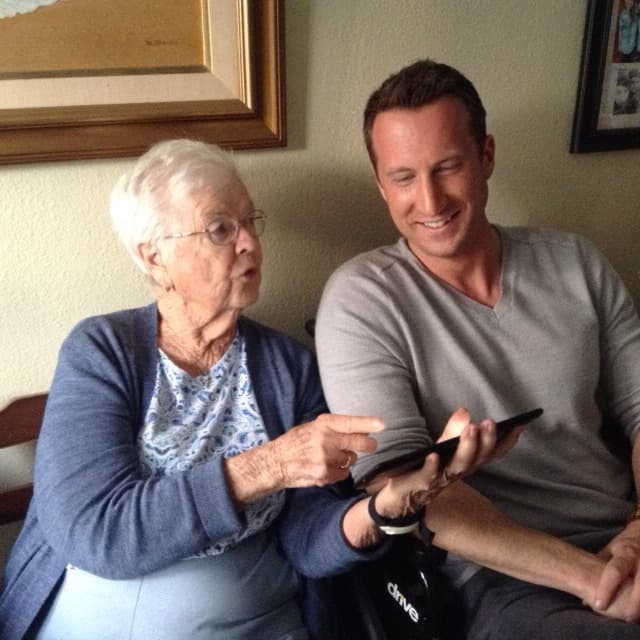
Connection is not lost.
It simply needs the
right catalyst.